

Stanford Lawyer Magazine



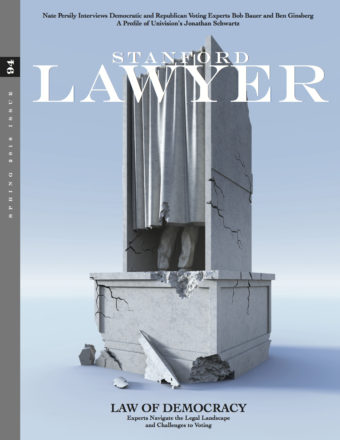
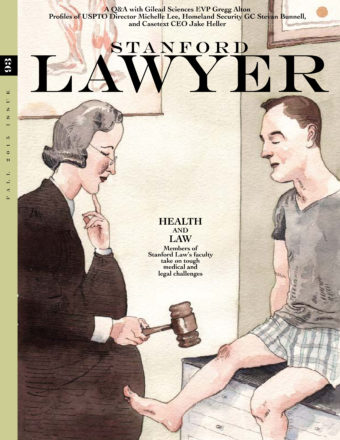

Spring 2015 – Issue 92
Lawyers leading Nonprofits: JDs Making a Difference

Fall 2014 – Issue 91
Civil Liberties and Law in the Era of Surveillance: Can the law keep up with technology?

Spring 2014 – Issue 90
Law and Policy Lab

Fall 2013 – Issue 89
For the Love of the Game

Spring 2013 – Issue 88
Law and Business in Emerging Markets

Fall 2012 – Issue 87
Meet New Dean Liz Magill

Spring 2012 – Issue 86
The New JD

Fall 2011 – Issue 85
Your Privacy at Risk

Spring 2011 – Issue 84
Getting to Green

Fall 2010 – Issue 83
Saving the Criminal Justice System

Spring 2010 – Issue 82
GCs in DC: Counsel to Government

Fall 2009 – Issue 81
Neuroscience and the Law

Spring 2009 – Issue 80
Weathering the Storm

Fall 2008 – Issue 79
Kinks in the Global Supply Chain

Spring 2008 – Issue 78
Beyond the Law: JDs in All Walks of Life

Fall 2007 – Issue 77
At the Tipping Point

Spring 2007 – Issue 76
Public Service: At the Core of the Profession

Fall 2006 – Issue 75
Transforming Legal Education

Winter 2006 – Issue 74
From Silicon Valley to CNN

Fall 2005 – Issue 73
Technology’s Field Generals

Spring 2005 – Issue 72
The Chief

Winter 2004 – Issue 71
Exposing Tax Shelters

Fall 2004 – Issue 70
New Dean Takes Charge

Summer 2004 – Issue 69
White House Insider

Spring 2004 – Issue 68
Who’s Un-American?

Fall 2003 – Issue 67
Troubled Waters

Summer 2003 – Issue 66
Do the Right Thing

Spring 2003 – Issue 65
Hail to the Chief

Fall 2002 – Issue 64
Has Copyright Gone Too Far?

Summer 2002 – Issue 63
Down a Dangerous Road

Spring 2002 – Issue 62
The World’s Top Cop

Fall 2001 – Issue 61
Practice Law in the Future

Summer 2001 – Issue 60
Beyond Napster

Fall 2000 – Issue 59
Why Paul Cassell ’84 Won’t Remain Silent
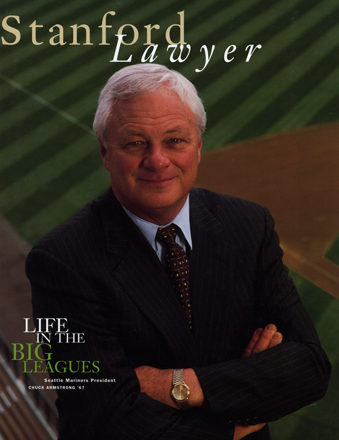

Spring 2000 – Issue 57
Taking Care of High Tech

Fall 1999 – Issue 56
Set for a New Century

Summer 1999 – Issue 55
The Moral Force of Cheryl Mills

Fall 1998 – Issue 54
The New Wave

Summer 1998 – Issue 53
Separation of Powers

Spring 1998 – Issue 52
Juries on Trial
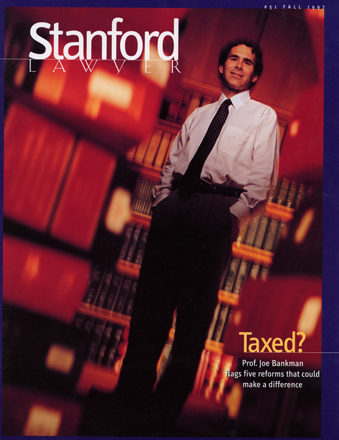

Fall 1996 – Issue 50
Warren Christopher on Green Diplomacy

Spring 1996 – Issue 49
Professors and Public Service

Fall 1995 – Issue 48
Celebration ’95

Fall 1994 – Issue 47
The Pursuit of Knowledge

Fall 1993 – Issue 46
The Making of a Law School

Fall 1992 – Issue 45
Gorbachev on the Rule of Law

Fall 1991 – Issue 44
Copyright in the Information Age

Fall 1990 – Issue 43
Thinking about Tort Law

Spring 1990 – Issue 42
Good Speech, Bad Speech

Spring 1989 – Issue 41
Beyond Litigation

Fall 1988 – Issue 40
High Tech

Spring 1988 – Issue 39
Law and Business

Fall 1987 – Issue 38
New Deals

Spring 1987 – Issue 37
Ranchers and Lawyers

Fall 1986 – Issue 36
Early Women

Spring 1986 – Issue 35
Total Justice

Spring 1985 – Issue 33
Supreme Court

Fall 1984 – Issue 32
Frank Church (AB ’47, JD ’50)

Spring 1984 – Issue 31
Defending the Guilty

Fall 1983 – Issue 30
Heroin Options

Winter 1982 – Issue 29
An Interview with Dean Ely

Spring 1982 – Issue 28
Democracy and Judicial Review

Fall 1981 – Issue 27
Harvard Professor Will Be next Dean

Spring 1981 – Issue 26
Interview with Charles Meyers

Fall 1980 – Issue 25
Law and Computers

Winter 1979 – Issue 24
Stanford Lawyers Abroad

Spring 1979 – Issue 23
Legal Services for the Hadicapped

Fall 1978 – Issue 22
Babcock on the Role of Government Lawyers

Spring 1978 – Issue 21
Black Unions in South Africa

Fall 1977 – Issue 20
Brainwashing and Criminal Liability

Spring 1977 – Issue 19
Paul Brest on Preferential Admissions after Bakke

Fall 1976 – Issue 18
Lawrence Friedman’s Thoughts on History of American Law

Fall 1975 – Issue 17
Celebration of Crown Quadrangle

Winter 1975 – Issue 16
Tribute to Marion Kirkwood

Summer 1974 – Issue 15
Conversations with Earl Warren

Winter 1973 – Issue 14
Water Law at Stanford

Summer 1973 – Issue 13
Nathan Abbott

Winter 1972 – Issue 12
Griswold as ABA Dinner Speaker

Spring 1972 – Issue 10
Stanford Law School Supreme Court Clerks

Spring 1972 – Issue 11
Responses to the Board of Visitors

Fall 1971 – Issue 09
Rehnquist Named to Supreme Court

Summer 1971 – Issue 08
Commencement- 1971

Spring 1971 – Issue 07
Thomas Ehrlich, School’s Seventh Dean

Fall 1970 – Issue 06
Environmental Law at Stanford

Spring 1970 – Issue 05
Criminal Law at the Law School

Spring 1969 – Issue 04
The Legal Aid Society

Spring 1968 – Issue 03
Bill Meissner ’70

Winter 1967 – Issue 02
Stanford Law Review

Spring 1966 – Issue 01
Stanford Law Forum